
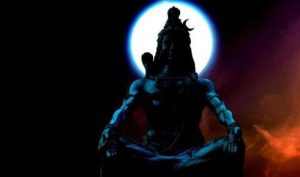
What If the Key to Liberation Was Hidden in Every Single Breath You Take?
Right now, as you read this, you are breathing approximately 21,600 times today.
According to the Vigyan Bhairav Tantra — one of the most profound texts of Kashmir Shaivism — every single one of those breaths contains a doorway to the supreme consciousness. To Shiva. To your own true nature.
The text has been hiding in plain sight for over 1,400 years. And almost no one is practicing it.
This guide will introduce you to the first and most fundamental technique of this extraordinary tradition — a prana yoga meditation that requires no special equipment, no prior experience, and absolutely no cost. It is available to you in this very moment.
What Is the Vigyan Bhairav Tantra?
The Vijnanabhairava Tantra (also written as Vigyan Bhairav Tantra or Vignyan Bhairav Tantra) is a sacred dialogue between Shiva and his consort Bhairavi. She asks him a profound question: Who are you, truly?
Instead of answering in words, Shiva responds with 112 meditation techniques — 112 gateways to experience the supreme reality directly.
This text is the crown jewel of Kashmir Shaivism, the non-dual Shaiva philosophy that flourished in the Kashmir Valley between the 8th and 12th centuries CE. Unlike many philosophical traditions that speak about consciousness, Kashmir Shaivism gives you precise methods to experience it.
The Vigyan Bhairav Tantra is not a belief system. It is a laboratory of consciousness.
Kashmir Shaivism: The Philosophy Behind the Practice
Before we dive into the meditation technique, it helps to understand what Kashmir Shaivism teaches — because the philosophy and the practice are inseparable.
The Central Claim
Kashmir Shaivism makes one breathtaking assertion: you are not a human being seeking God. You are Shiva — pure, infinite consciousness — temporarily experiencing the appearance of being a limited individual.
As the Shiva Sutras state in their very first verse: Chaitanyamatma — Consciousness itself is the Self.
The goal of this path, unlike many spiritual traditions, is not to find God. It is to recognise that you already are what you have been searching for.
Why We Feel Separate: The Five Kanchukas
If we are Shiva, why do we suffer? Why do we feel small, limited, and separate?
Kashmir Shaivism explains this through Maya and her five coverings, called the Pancha Kanchukas:
- Kala — from infinite creative power to limited doership (“I did this, I made that”)
- Vidya — from omniscience to limited knowledge (only knowing our corner of the world)
- Raga — from infinite fullness to desire (the constant sense that something is missing)
- Kala — from eternal existence to being trapped in time
- Niyati — from freedom beyond karma to being bound by cause and effect
These are not punishments. According to Pratyabhijna (the Recognition philosophy of Kashmir Shaivism), this is Shiva’s own free play — a cosmic game of hide-and-seek with himself. The problem is that we’ve forgotten we are the player.
The Three Bodies and the Puryashtaka
Kashmir Shaivism teaches that we inhabit three bodies simultaneously:
- Sthula sharira — the gross physical body
- Sukshma sharira — the subtle body, called the Puryashtaka (the eight-fold city)
- Karana sharira — the causal body
The subtle body, or Puryashtaka, consists of five tan matras (the subtle elements of sight, sound, touch, smell, taste) plus manas (mind), buddhi (intellect), and ahamkara (ego). This is what travels from lifetime to lifetime, carrying all our impressions, beliefs, and unfinished karmic business.
As the Shiva Sutras teach: Atma chittam — the individual self is this bundle of mind-stuff. And what keeps us bound within it? Gyana bandha — the bondage of limited knowledge. The very identities we cling to (“I am Indian,” “I am a father,” “I am this body”) become the bars of a cage.
The path of Kashmir Shaivism is to see through these limitations — not by renouncing the world, but by recognising the infinite consciousness that was always wearing these costumes.
The First Dharana of the Vigyan Bhairav Tantra: Breath as Liberation
Now we come to the practice itself.
The Vigyan Bhairav Tantra opens with what is arguably the most accessible and powerful technique in the entire text. It is a prana yoga meditation built on the simplest thing in the world: observing your own breath.
Here is the Sanskrit verse:
Udah prano hido jivo…
Visaram atma pitam
The meaning unfolds like this:
Udah = upward; prana = the outgoing breath
When you exhale, prana rises and moves out of the body.
Jiva = that which moves toward the heart; Apana = the incoming breath
When you inhale completely, apana moves downward and inward.
At the end of a complete exhalation — when the breath is fully outside — there is a natural pause. A gap. A stillness.
At the end of a complete inhalation — when the breath is fully inside — there is another pause.
These two gaps are called Visarga in Kashmir Shaivism.
And here is the extraordinary teaching of the Vigyan Bhairav Tantra:
These gaps are Shiva himself.
Para rupi visarga — this is the Supreme in the form of emptiness. For just a fraction of a second, at the turning point of every breath, the mind has no object. Thought has paused. Time seems to stand still. In that gap, the artificial boundary between “me” and “everything” dissolves.
The Vigyan Bhairav Tantra calls what you find there chitah ananda — the bliss of pure consciousness. If you meditate in the utpati (the arising) and visarga (the gap) of every breath, you will experience purnatva — a fullness, a completeness, a satisfaction that has nothing to do with outer circumstances.
How to Practice: The Hamsa Meditation
Here is a step-by-step guide to the foundational Kashmir Shaivism breath meditation drawn from the Vigyan Bhairav Tantra.
Step 1: Sit in Siddhasana
Sit comfortably with your spine straight. The traditional position is Siddhasana: left foot beneath you, right foot resting above the left. If this is not comfortable, sit in any position where your spine is naturally erect.
Rest your hands on your knees with thumbs and index fingers lightly touching (jnana mudra). Close your eyes.
Step 2: Discover the Hamsa Sound
This is the entry point that makes the practice accessible even for beginners.
Without altering your breath in any way, simply observe it. Listen to the subtle sound your breath makes:
On the exhale, the natural sound is “Sa” (or “Sah”)
On the inhale, the natural sound is “Hum” (or “Ham”)
Together: Hamsa. Hamsa. Hamsa.
You are not chanting. You are not forcing anything. You are simply noticing what your breath is already doing — what it has been doing every moment of your life, 21,600 times a day. The Hamsa mantra is not something you add to your breath. It is something you discover within it.
This is what Kashmir Shaivism calls anavopaya — working with the gross body as the starting point. The body itself becomes the teacher.
Step 3: Find the Visarga
As you follow the Hamsa sound, your breath will naturally become quieter and more refined. Your nervous system starts to settle.
Now, at the end of each exhale — when the breath is completely outside — pause your attention there, in that empty space, before the next inhale arises.
Stay in that gap. Even for one second. Even for half a second.
Then, when the inhale is complete and the breath is fully inside — pause your attention there as well.
What do you notice?
Most practitioners, within a few minutes of this practice, begin to feel something warm, expansive, and quietly joyful arising from within. This is not imagination. This is the Nirananda — the first of seven levels of bliss recognised in Kashmir Shaivism — beginning to surface.
Step 4: Recognise the Signs of Progress
The Vigyan Bhairav Tantra and Kashmir Shaivism describe several experiences that signal you are moving in the right direction:
A gentle delight spreading through the body
Udbhava — an inner leap or sudden expansion of joy
A tingling or vibrating sensation, especially in the hands and spine (related to Samana vayu — the pranic current that circulates in the nerves and blood vessels)
A feeling of weightlessness or spaciousness (related to Udana vayu)
In deeper practice, a reeling sensation of delight — the kind a musician experiences when completely absorbed in their art
These are not extraordinary supernatural events. They are natural, reproducible effects of the mind resting in its source.
From Anavopaya to Shaktopaya: The Three Paths
The practice above belongs to anavopaya — the path through the body and its energies. The word anu means the individual, the limited being. We begin where we are.
As your breath becomes more refined, something begins to shift. You start entering shaktopaya — the path through energy and awareness itself. The Hamsa mantra becomes unnecessary because you are resting directly in the spaciousness between breaths.
Eventually, Kashmir Shaivism points to shambhavopaya — the direct recognition of pure consciousness, requiring no technique at all. The seeker and the sought become one.
But the path unfolds naturally. There is no need to rush.
Why This Path Is for You
You may be wondering: I have no background in Sanskrit. I am not Indian. Is this tradition available to me?
The answer, rooted in the very philosophy of Kashmir Shaivism, is an emphatic yes.
Shiva is not a deity who belongs to one people or one geography. As the tradition teaches, Shiva is the essence of every being’s consciousness. The Vigyan Bhairav Tantra was not composed for Indians. It was expressed by consciousness, for consciousness — which means it was written for you.
The knowledge of masters like Abhinavagupta, Vasugupta, Utpaladeva, and the lineage through whom these teachings have been preserved — this is your inheritance as a seeker, regardless of your nationality, gender, religion, or background.
As the great invocation Purnamadah Purnamidam teaches:
From the complete arises the complete. When the complete is taken from the complete, the complete alone remains.
You are already complete. This practice simply helps you remember.
Your Next Step: The 9-Week Kashmir Shaivism Course
The practice described in this article is the very first step of a complete, structured journey through Kashmir Shaivism.
At Chaitanya Darshan (chaitanyadarshan.org), we have created a 9-week online course that takes you step by step through:
- The complete philosophy of Kashmir Shaivism, from Puryashtaka to Pratyabhijna
- The Shiva Sutras — all three chapters, with experiential practice for each
- The 112 techniques of the Vigyan Bhairav Tantra, in sequence
- The science of prana yoga — all five vayus and how to work with them
- The three upayas: Anavopaya, Shaktopaya, and Shambhavopaya
- Weekly guided meditations with initiation (Diksha) for all participants
Live Q&A sessions after every class
Each week builds on the last. The course is designed so that your intellectual understanding and direct experience grow together — because in Kashmir Shaivism, both are essential wings of the same flight.
The course is taught in English, is open to seekers from any tradition or background, and requires no prior knowledge of Sanskrit or Indian philosophy.
[Enrol in the Free First Class →] (chaitanyadarshan.org)
Frequently Asked Questions
What is the difference between Vigyan Bhairav Tantra and other tantra texts?
Most tantric texts deal with ritual, deity worship, or the acquisition of spiritual powers. The Vigyan Bhairav Tantra is unique in that it is entirely focused on direct techniques for experiencing supreme consciousness. It is sometimes called the Shivajnanopanishad — the secret teaching of Shiva’s knowledge — because it cuts through ritual to the essence.
Is Kashmir Shaivism the same as Shaivism generally?
No. While both worship or recognise Shiva as the supreme principle, Kashmir Shaivism (also called Trika Shaivism) is a specifically non-dual, tantric philosophical system. It differs from Shaiva Siddhanta (which is dualistic) and Veerashaivism. Its main texts include the Shiva Sutras, Spanda Karikas, Pratyabhijnahridayam, and the Vigyan Bhairav Tantra.
Can beginners practice Hamsa meditation?
Yes, absolutely. The Hamsa meditation is specifically recommended as the entry point into the Vigyan Bhairav Tantra practices precisely because everyone already has a breath. There is nothing to acquire. The practice begins exactly where you are.
What is prana yoga in Kashmir Shaivism?
Prana yoga, also called Ucchara yoga or Pranashakti yoga, is the practice of using the five pranic currents (prana, apana, samana, udana, vyana) as objects of meditation to enter higher states of consciousness. It is described in the Malinivijayottara Tantra as a primary path under anavopaya.
How long should I practice each day?
Even 10–15 minutes of sincere, attentive breath observation — with focus on the visarga (the gap between breaths) — will produce noticeable effects within days. The Vigyan Bhairav Tantra emphasises quality of attention over duration.
A Final Word
In a world saturated with meditation apps, breathwork protocols, and mindfulness techniques, the Vigyan Bhairav Tantra offers something radically different: not a technique for stress reduction, but a direct transmission of the recognition that you are already free.
The breath you just took — between the “Sa” of your exhale and the “Hum” of your inhale — there was a gap. In that gap, Shiva was looking out through your eyes.
The 9-week journey at Chaitanya Darshan is an invitation to make that recognition permanent.
The text carries a sense of reverence. Ideas are treated carefully, as though each word has intrinsic value and deserves attention.